Autism Students Up 27% in 6 Years | Find Their Talent, Not Their Label
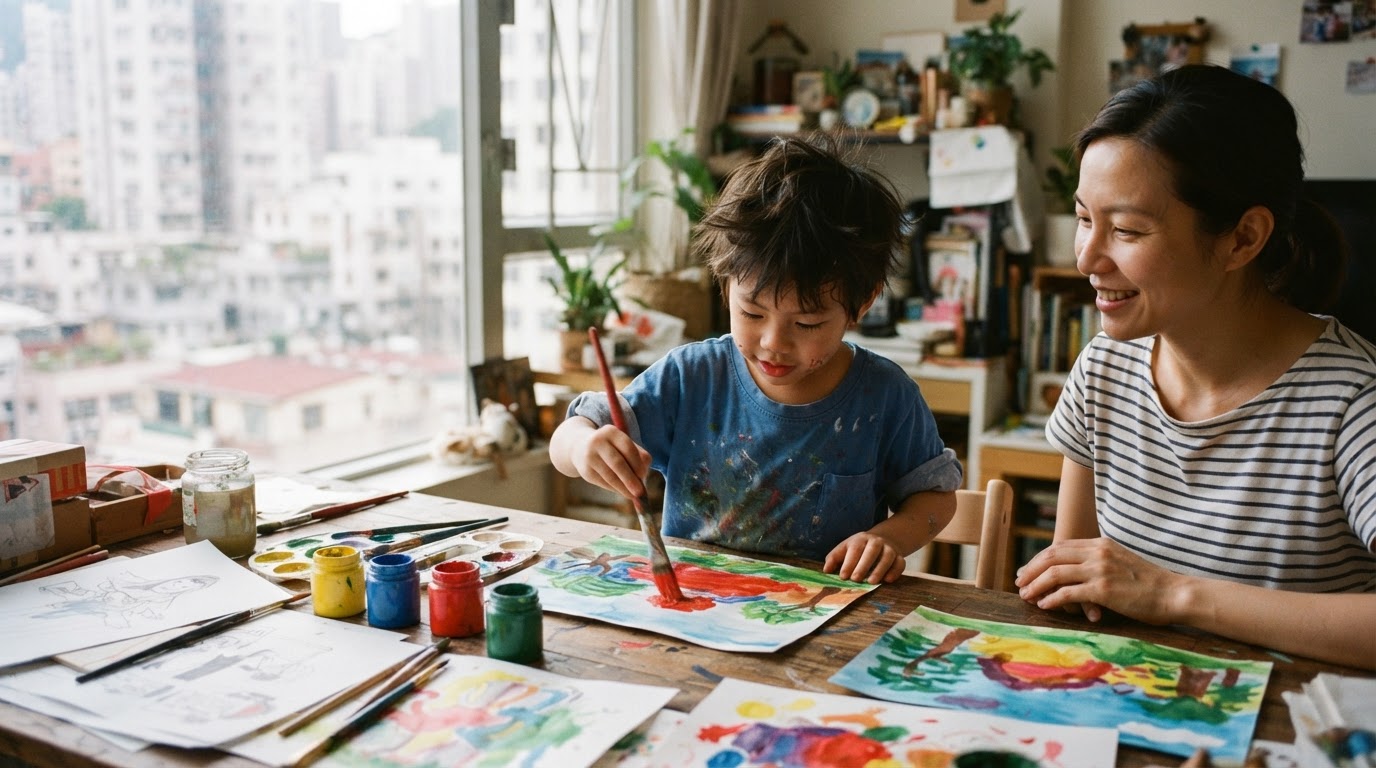
In recent years, the number of autistic students in Hong Kong public schools has kept climbing. According to the Education Bureau's 2025/26 figures, there are 15,110 autistic students in mainstream public primary and secondary schools — 7,680 in primary and 7,430 in secondary. Compared with 11,870 in 2019/20, that is an increase of roughly 27% over six years.
Behind that number are fifteen thousand children and fifteen thousand families. Many parents first notice very concrete signs: their child rarely initiates speech, barely responds to their name, likes repeating fixed actions, struggles to understand jokes, tone of voice or facial expressions. But the point we want to make is not how to "spot" these children early — it is how to discover and amplify their talents, because every child carries a gift waiting to be found.
🏷️ The moment we label, we stop seeing the child
When we stick the word "autism" on as a label, it is easy for that label to cover our eyes: we only see "he doesn't talk", "he's a bit odd", "he's different", and we miss the living child behind it — what he loves, where he shines, and the things he focuses on with a depth far beyond his age.
The problem is never what a child "lacks" — it is whether we give them a chance to let their talent come through.
This is not about refusing assessment. It is a reminder that the purpose of assessment is to understand how to help, not to hand down a verdict. Once a verdict is set, the expectations of the adults quietly shift, and the child unconsciously moves toward that "not good enough" story — precisely the "self-fulfilling prophecy" psychology has described for decades.
🧩 Holistic psychology: see the whole system, not a single symptom
A holistic view never reduces a child to a "symptom". It looks at the whole network of "child × family × school × peers". A child who "won't speak up" may not have a problem at all — the environment may simply fail to make them feel safe: the classroom is too noisy, routines keep changing, and adults keep asking them to do things they cannot understand.
- Their sensory world is not the same as ours (the same sound can feel ten times harsher to them).
- What they need is "predictable structure" — knowing what happens next is what lets them relax.
- That "quirky" focus of theirs is often their greatest gift, waiting for someone to catch it.
So instead of asking "what's wrong with them?", ask "does this environment have a way to hold them?" — changing the environment, and changing how we respond, is often more fundamental than "treating" the child in isolation.
🌱 Discovering talent is really about removing three walls
To help a child's talent come through, there are three things we can do — and they map directly onto what keeps appearing in autism research:
- Sensory regulation: first address the sensory load that leaves a child gasping for air (noise, bright lights, the feel of fabric). Remove that wall, and they have the energy to engage with the world.
- Predictable structure: give them a stable, predictable schedule and environment, and their anxiety drops — only then do they dare step out and try new things.
- Follow their special interest: whether it's dinosaurs, maps or numbers, these aren't "quirks to cure" — they're a doorway into the child's world. Starting from their interest is often the direction of their future.
None of these three is about "changing the child". Every one of them is about changing our environment and our response.
🔬 What the evidence tells us
Psychology has long shown that belonging is one of the most fundamental human motivations — a child needs to feel accepted at home and at school before they have the courage to show their talents. Autism is best understood as a form of neurodiversity rather than a "disease to be cured": what these children need is not to be "corrected", but to be understood, and on that foundation, helped to play to their strengths.
The difference in perspective is huge: when we see it as a "deficit", we rush to "fix"; when we see it as a "different kind of brain", we set out to "discover". And a child's growth begins with the latter.
💬 Does your child carry a gift waiting to be found?
Every child deserves to be truly seen — not defined by a label, but seen for their real strengths and potential. Want to understand how, at home and at school, you can help your child remove those walls and let their talent come through? Book a free 10-minute WhatsApp consultation — we'd be glad to listen.
References
- Education Bureau, Hong Kong (2026). Statistics on student categories in public ordinary primary and secondary schools, 2025/26 school year. — Official data: 15,110 autistic students (7,680 primary, 7,430 secondary), up roughly 27% over six years from 11,870 in 2019/20.
- Baumeister, R. F., & Leary, M. R. (1995). The need to belong. Psychological Bulletin, 117(3), 497–529. — The need to belong as a fundamental human motivation, supporting the idea that family acceptance is the foundation of a child's courage to show their talents.
- Sensory Processing Differences in Individuals With Autism Spectrum Disorder (2023). — A review identifying sensory processing differences as a core feature of autism, supporting the "sensory regulation" approach of clearing obstacles so talent can emerge.
- National Autistic Society. Autism. — Describes autism as a lifelong neurodivergence with strong needs for predictability, routine and focused interests, supporting the "predictable structure" and "special interests" approaches.