Anxiety at a Record High — What AI Can't Give Gen Z Is Real Connection
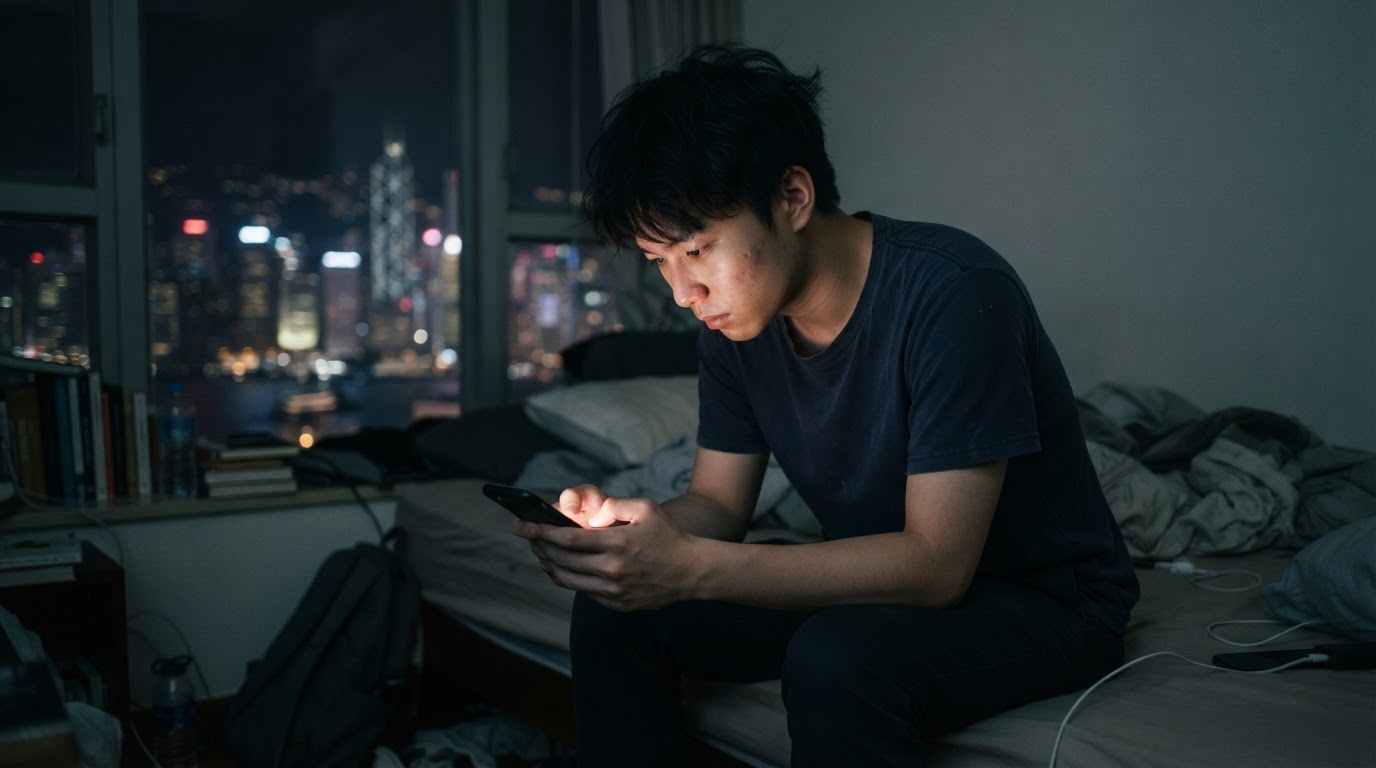
Here's a strange irony of our time: phones keep getting smarter, AI keeps getting better — yet people in Hong Kong keep getting unhappier. 📉
The Chinese University of Hong Kong's Department of Social Work, together with the Mental Health Association of Hong Kong, ran the 7th "Hong Kong Depression Index Survey", speaking to 2,695 people. The results are sobering:
- Depression averaged 7.27 and anxiety 5.90 — both record highs 📈
- Gen Z (18–24) is hit hardest: 43.5% report moderate-to-severe depression, and 32.7% moderate-to-severe anxiety 😢
- And 55% say they would not — or aren't sure they would — seek professional help, the top reasons being "too busy" and "I believe I can handle it myself"
And here's the part that stings the most — AI assistants have now climbed to the sixth most common source people turn to for help. 🤖
💡 AI is brilliant — but there's one thing it can't give you
AI has plenty going for it: it's there 24/7, replies instantly, never gets tired of you, and can recite the entire canon of psychology.
But there's one thing it can't give you — a sense of belonging.
A person is a whole made of body, mind and environment. The survey found something telling: the longer people spend on screens, the higher their depression and anxiety scores. That's no coincidence — when you're glued to a screen all day, your connection to your body, to your real environment, to the real people around you is being cut, one slice at a time.
AI can give you an instant reply — but it can't give you the warmth of being accepted.💛
🧩 The whole is greater than the sum of its parts: we need "we"
Holistic psychology keeps coming back to one idea: the whole is greater than the sum of its parts. A person's struggles are never just "one person's" problem — your stress is often made by family, work and society pressing in together.
The real way out isn't talking to a machine. It's being inside a community and feeling "I belong here". And that is something AI can never give you.
🤖 AI is a tool, not a replacement
I'm not saying AI is useless. AI is a wonderful tool: it can keep you company, give you information, remind you to take care of yourself.
But when AI becomes your only emotional outlet, that's a warning sign — it means your connection to real people has already broken, and the whole system is off balance.
🏷️ Why traditional Western psychology can't help here
First, it's too individualistic — always telling you to "just sort yourself out", which quietly turns asking for help into a sign of weakness. That ends up pushing people toward AI instead.
Second, it's too wedded to empiricism and quantifying emotions, missing the one thing it can't measure but matters most: relationship. That kind of truth only shows up in individual cases — not in a questionnaire.
Traditional Western Psychology vs Holistic Psychology
Two different ways of looking at emotional distress
| Dimension | Traditional Western Psychology | Holistic Psychology |
|---|---|---|
| Focus | The individual ("sort yourself out") | The whole (person × family × environment) |
| View of AI help | No objection — a personal choice | A warning sign that real connection is breaking |
| Method | Quantify emotions, label | Look at cases, value belonging |
| What you learn | Rules (manage your own emotions) | A model / system (rebuild real connection) |
💛 Remember: you don't need a machine that can answer
When you feel "messy", "drained", "I don't know why I'm like this" — what you actually need isn't an AI that replies instantly. It's a person who truly sees you and is willing to listen.
A screen's glow can never warm you. Real warmth comes from people who are actually there. 🌱
Want to feel what it's like to be truly seen and accepted? Book a free 10-minute WhatsApp consultation. 📞
References
- The Chinese University of Hong Kong, Communications and Public Relations Office (2026, March 5). CUHK survey reveals Hong Kong's depression and anxiety indices reach record highs; AI assistance rises to sixth place; over-reliance may delay professional treatment. Press release.
- Baumeister, R. F., & Leary, M. R. (1995). The need to belong: Desire for interpersonal attachments as a fundamental human motivation. Psychological Bulletin, 117(3), 497–529. (The need to belong is a fundamental human motive — echoing the point that people need community belonging, not conversation with a machine.)
- Walton, G. M., & Cohen, G. L. (2011). A brief social-belonging intervention improves academic and health outcomes of minority students. Science, 331(6023), 1447–1451. (Even a small belonging intervention improves mental health — proof of the power of being accepted, something AI cannot offer.)
- Twenge, J. M., & Campbell, W. K. (2018). Associations between screen time and lower psychological well-being among children and adolescents: Evidence from a population-based study. Preventive Medicine Reports, 12, 271–283. (More screen time, worse psychological well-being — echoing the finding that our bond with body and real environment is cut by devices.)
- Norcross, J. C., & Lambert, M. J. (2018). Psychotherapy relationships that work III. Psychotherapy, 55(4), 303–315. (The therapeutic relationship is the core of healing — and relationship is exactly what AI cannot provide.)