Why a Precise Map Still Leads You Astray: The Limits of Traditional Western Psychology
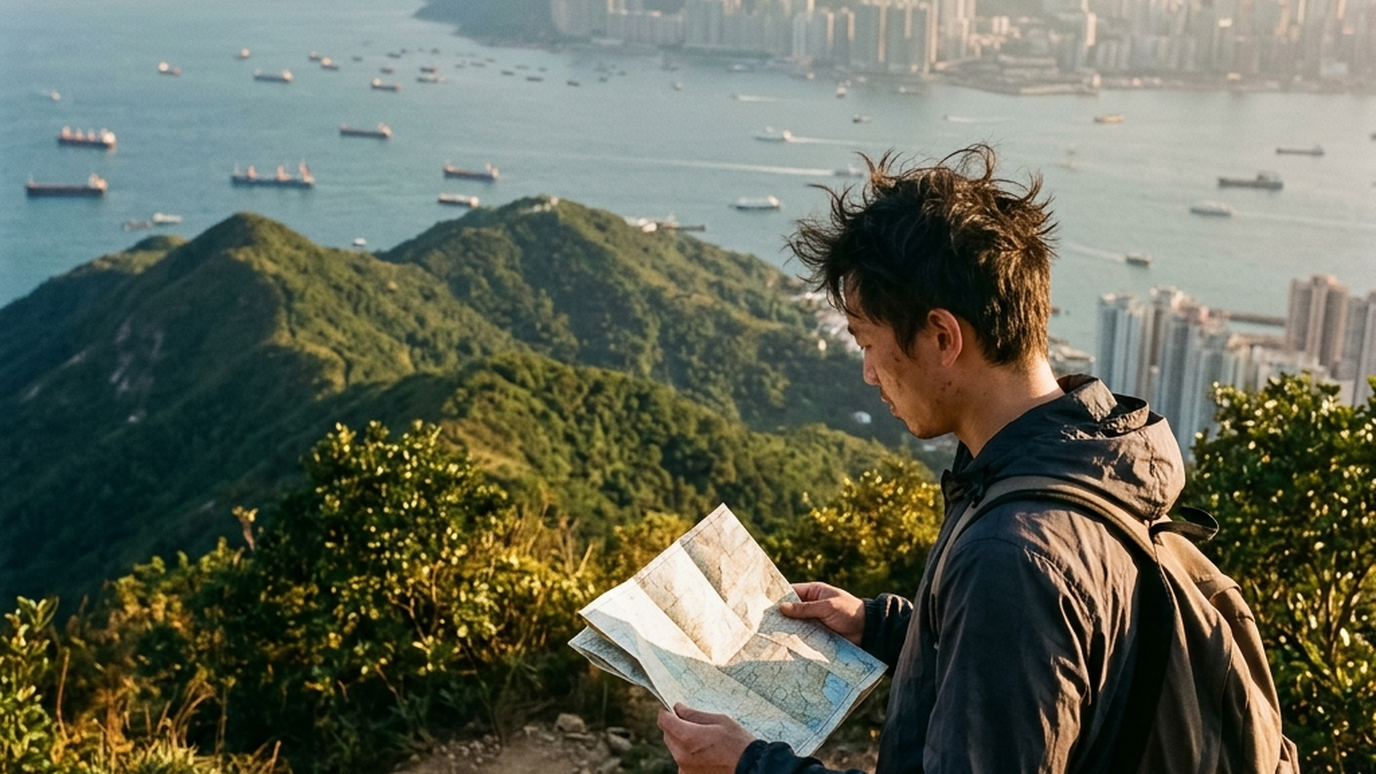

Imagine you are holding a map, drawn with great precision — every street, every mountain, every turn marked clearly. You trust it and follow it. But as you walk, you realise: this map was drawn of a different city. The more you follow it, the more lost you become.
That, for many people, is what it feels like to first encounter traditional Western psychology.
Let me be fair first: traditional Western psychology is not wrong. It is an extremely precise map, with its own system, its own logic, its own contributions. It is just that — the place the map was drawn of is not exactly the place where you stand.
🗺️ Where was this map drawn?
The people who drew the map all came from the same village — Western, Educated, Industrialized, Rich, and Democratic. Psychologists call these people "WEIRD". The reality is: this group makes up only about 12% of humanity, yet almost all of psychology's research is conducted on them.
The problem is not that "12% cannot be studied" — it is "using 12% of people to explain the other 88%". You are a Hong Kong person, your culture, your family, your values are very different from this 12%. Take their map and walk your own road, and of course you will get lost.
🏔️ They drew the mountains, but missed the rivers
The Western map draws an "independent self" — a person standing alone, relying on themselves. But the Chinese heart is a "web woven of relationships". Your joys and sorrows are often tangled up with your family, your friends, and society as a whole.
A Hong Kong person's stress may not be their own problem, but the weight of an entire family, an entire workplace, an entire society laid upon them. If the map only draws "me", you will never see these rivers.
✂️ They cut one connected landscape into two pictures
Long ago, a man named Descartes cut the human being into two halves: mind and body. From then on, psychology looked at the "mind" and medicine looked at the "body", and the two never spoke.
But when your stomach hurts, your mind is not happy either; when you cannot sleep for a long time, you naturally grow tired, irritable, and drained. Mind and body are one connected landscape — cut it into two pictures, and you can no longer see the whole painting.
🌫️ They label normal fog as "illness"
Sadness, anxiety, and confusion are the weather of life, not necessarily illness. Everyone has rainy days.
But the map loves to stick a "symptom" label on every patch of fog. You are unhappy, so they say you are depressed; you are nervous, so they say you have an anxiety disorder. Once labelled, you turn from "a person going through a hard time" into "a sick person". And that label itself is a form of negative suggestion.
🌲 They drew the forest as a few trees
Take apart every gear, and you can no longer see how the whole clock works. Traditional Western psychology loves to take things apart — splitting a person into emotions, cognition, behaviour, the subconscious, and studying each one separately.
But a person is not a pile of parts. You are a whole; your mind, body, spirit, and environment form one ecosystem. Draw the forest as a few trees, and you will never see the whole forest.
🌌 They erased the starry sky
There are things in the soul that cannot be measured, yet are very real — meaning, connection, spirituality, a person's sense of belonging to life.
But the map cannot draw these, so it treats them as if they do not exist. It erases the whole starry sky, leaving a few measurable stars. Those things deep inside you that are "hard to say but very real" have no place on the map.
🛤️ The edge of the map is where the road begins
Let me be fair once more: this map is not useless. It is very useful — precise, reliable, systematic, and it has taught us a great deal about people. The research methods and empirical spirit of psychology deserve genuine respect.
It is just that every map has an edge. When you walk to the edge of the map, you will find there is still road ahead — road the map never drew.
☯️ Not tearing up the map, but walking the real ground
Holistic psychology is not about tearing up the map. It is a reminder — what you are walking is real ground, not the picture.
Zhuangzi once wrote: "Heaven and earth are born together with me, and all things are one with me." This is another way of seeing — not only measuring with instruments, but walking the path yourself, seeing the whole sky, the whole forest, the whole river.
When you turn from "following the map" to "walking it yourself", you will discover: the road ahead is far longer than the map ever drew.
📚 References & Further Reading
- Henrich, J., Heine, S. J., & Norenzayan, A. (2010). The weirdest people in the world? Behavioral and Brain Sciences, 33(2-3), 61–83. (The origin of "WEIRD" — most psychology samples come from Western, Educated, Industrialized, Rich, Democratic societies, a small fraction of humanity treated as representative of all.)
- Open Science Collaboration. (2015). Estimating the reproducibility of psychological science. Science, 349(6251), aac4716. (Only 36–39% of 100 psychology studies successfully replicated — a reminder that empirical results must still be tested on real people.)
- Ioannidis, J. P. A. (2005). Why most published research findings are false. PLoS Medicine, 2(8), e124. (Explains why many published findings may not hold up — "measurable" is not the same as "true".)
- Ulrich, R. S. (1984). View through a window may influence recovery from surgery. Science, 224(4647), 420–421. (Patients recovered faster with a view of nature — mind, body, and environment are one connected landscape.)