It Isn't Trauma Kids Fear Most. It's Not Knowing What Comes Next
🧩 The risk we keep overlooking
When we talk about childhood adversity, we usually ask whether something bad happened: was there violence, was there addiction at home, did the parents separate. Those questions matter, and they have saved lives. But a large 2026 study points to a second signal we rarely measure: what children fear most is often not the bad event itself, but not knowing what comes next.
Led by UC Irvine with Chapman University and Rady Children's Health, the team added a five-item "childhood unpredictability" questionnaire (QUIC-5) alongside standard ACE screening at 19 paediatric clinics in Orange County, California, between 2021 and 2024. The cohort covered 29,788 children under 18. The findings were published in Nature Mental Health.
🔬 What the study found
Both measures were associated with depression, anxiety, sleep problems, behavioural difficulties, and physical symptoms such as headaches and stomach aches. The crucial part: a group of children with no conventional ACEs at all, no abuse, no household dysfunction, only highly unpredictable daily life, still showed clearly elevated rates of depression. Standard screening misses them precisely because nothing "bad" was recorded.
When both questionnaires were used together, the associations were often stronger than either alone. Instability is not a minor issue; combined with adversity, the effect multiplies rather than adds.
🧠 Why unpredictability gets under the skin
The brain is a prediction machine. When the environment is predictable, the body can rest, repair and grow. When it is not, the body stays on watch. That vigilance is not "overthinking"; it is physiological. Stress hormone rhythms shift, sleep lightens, and the body raises the alarm first, through sleep problems, headaches and stomach aches.
Psychologically, the resources needed for emotion regulation are spent on monitoring the environment, leaving less for learning, play and relationships. Relationally, what matters is not only whether someone is there, but whether it is the same person responding in the same way. And at the level of meaning, repeated "I don't know what happens next" erodes the basic trust that the world is roughly safe.
🏠 Where these signals hide in Hong Kong
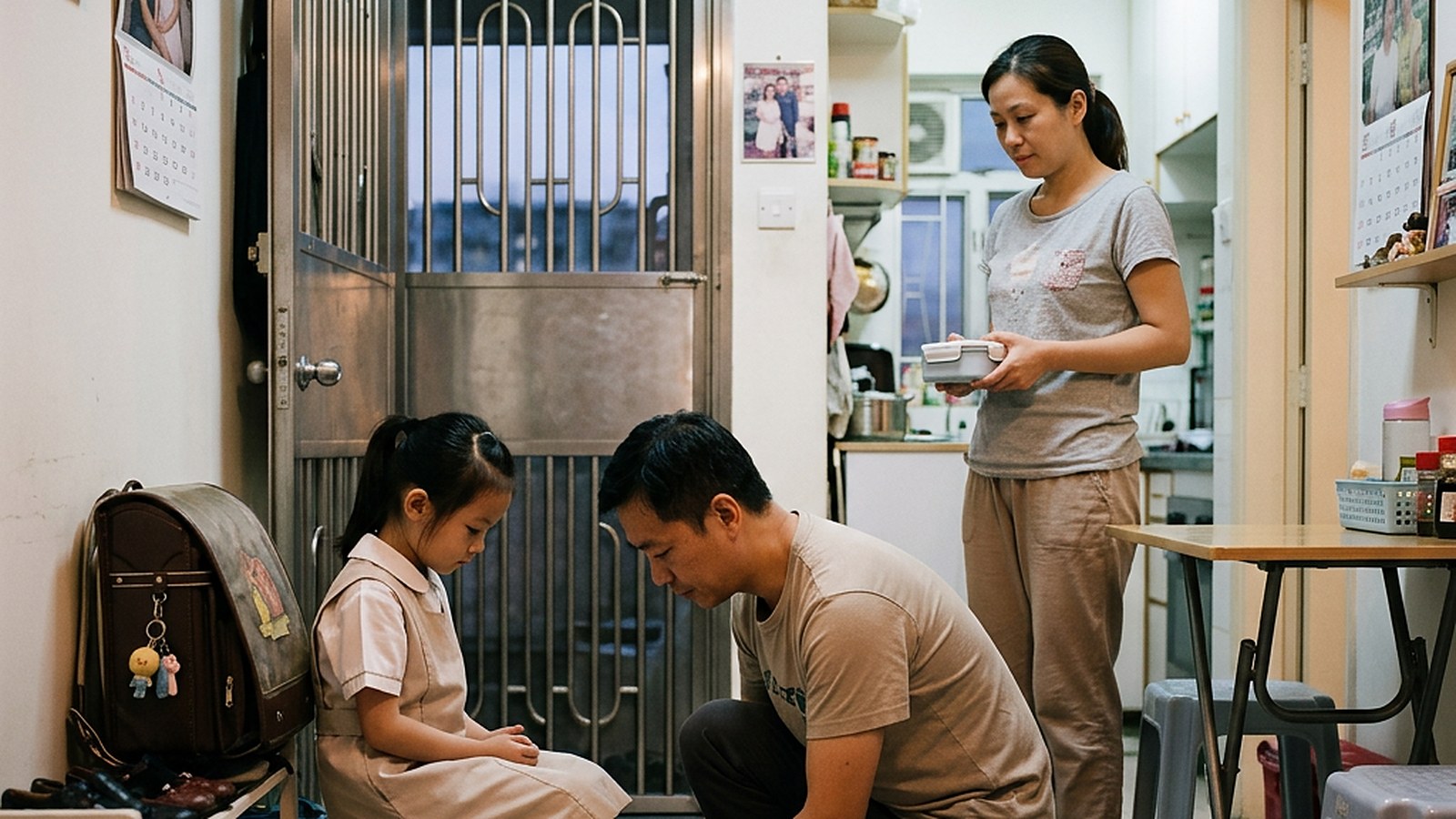
Unpredictability is not always dramatic. Moving flat, changing schools, rotating caregivers, shift work, a different adult collecting the child each day, weekend plans that change at the last minute, bedtimes that drift. These are ordinary in Hong Kong households. Children rarely say "I feel unsafe". They show it: refusal to sleep, sudden clinginess, temper outbursts, a stomach ache before school.
A child does not need a perfect home. They need a home they can predict.
🤝 What standard screening does well, and what wholistic practice adds
The contribution of ACE screening should not be understated. It turned experiences that are hard to disclose into measurable, comparable indicators, allowing resources to be directed at scale to the families who need them most. That is a genuine public health achievement.
Wholistic psychology does not replace it; it adds a layer. Alongside itemised risks, it looks at the rhythm of family life. A single act, such as a fixed bedtime routine, is simultaneously three things: training for the body clock, a signal of safety, and a relational ritual. Standard practice treats symptoms in separate tracks; a wholistic lens uses "family rhythm" as one entry point that touches body, mind and environment at once.
The location of intervention also shifts. Standard intervention mostly happens in the clinic. A wholistic view holds that the layout of the home, the handover between caregivers, and the buffer after school are themselves interventions.
🌱 Five things parents can do
- Protect one or two small rituals: ten minutes at bedtime, a fixed sentence at the door. It does not need to be perfect, only repeated.
- Announce change in advance: moving, changing schools, a new caregiver. Use a calendar or drawings so the child knows when and what.
- Make handovers ceremonial: who collects, where they wait, the first sentence they say. Predictable details become security.
- Leave fifteen minutes after school: no homework questions yet. Let the body shift out of school mode.
- Respond consistently: the closer the adults' reactions are, the less the child needs to stay on guard.
💬 When to seek professional support
If sleep, mood or physical symptoms persist beyond two weeks, or you notice marked withdrawal, school refusal or appetite change, it is worth seeking professional support. Not because something has "gone wrong", but because the child needs to know that someone will be there, reliably.
If you would like to build a more predictable rhythm at home, or you are yourself living under constant uncertainty, you are welcome to book a 10-minute WhatsApp consultation.
References
- Glynn, L. M., Liu, S. R., Golden, C., Weiss, M., Baram, T. Z., et al. (2026). Childhood unpredictability and mental health: a five-item screening measure (QUIC-5) across 19 paediatric clinics. Nature Mental Health, 4(8), 1219–1226. https://doi.org/10.1038/s44220-026-00681-x
- Felitti, V. J., Anda, R. F., Nordenberg, D., Williamson, D. F., Spitz, A. M., Edwards, V., Koss, M. P., & Marks, J. S. (1998). Relationship of childhood abuse and household dysfunction to many of the leading causes of death in adults: The Adverse Childhood Experiences (ACE) Study. American Journal of Preventive Medicine, 14(4), 245–258.