Does Power Turn You into a "Cookie Monster"? 🍪
🍪 That colleague who changed after promotion
Have you ever noticed a colleague who, after a promotion, became a different person? Louder, less polite at the table, and no longer caring about how others feel. You might think: were they always like this, just hiding it?
A psychology experiment suggests the answer may not be what you think.
🔬 The experiment: a plate of 5 cookies
This is the famous "Cookie Monster Study" by psychologist Dacher Keltner.
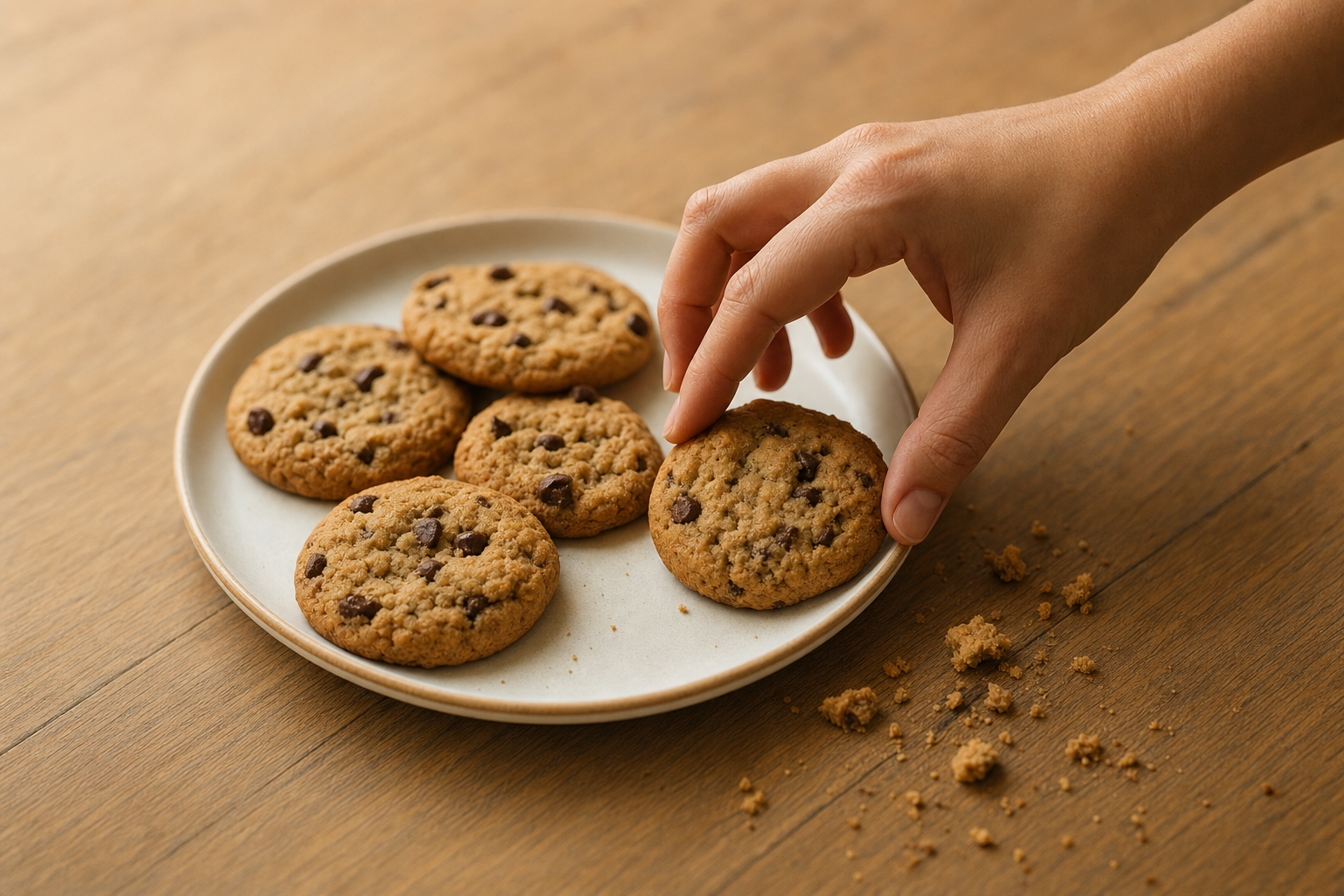
Three college students were placed together to discuss a controversial social policy. One was randomly assigned to be the "leader" who evaluates the others' work. Partway through, a researcher brought in a plate of 5 cookies — enough for one each, with two left over.
The result? Almost instantly, the "leader" reached for the 4th cookie (i.e. ate two).
😳 The real shock wasn't the extra cookie
Researchers watching behind a one-way mirror logged that powerful people were significantly more likely to:
- 👄 Eat with their mouths open (no basic table manners)
- 🍪 Drop crumbs everywhere (ignoring etiquette)
- 👕 Wipe their mouths on their sleeves (losing basic decency)
The conclusion: power triggers disinhibition — powerful people act like children because they stop caring about social norms, politeness, or how others perceive them.
🌊 A holistic psychology view
1. Power is a "situation", not a "personality"
The most striking part is that the "leader" was randomly assigned. It is not that "powerful people are naturally rude" — it is that power, as a situation, changes them.
Holistic psychology sees the person and environment as one interactive whole — power changes a person's situation, which changes their behaviour. It is not "their nature"; it is "the environment they are in".
2. Mind and body are one: power changes the body
The most interesting part isn't the extra cookie, but the table manners. Dropping crumbs, eating open-mouthed, wiping on sleeves — these are bodily behaviours, not deliberate decisions.
Holistic psychology holds that mind and body are one: the mental state (feeling powerful) directly changes bodily behaviour. This is exactly what traditional Western psychology often misses — it only looks at the "mind", not the "body".
3. No labelling: not a "sociopath"
Traditional Western psychology is quick to label these people as having "antisocial tendencies" or a "personality problem".
But holistic psychology would not — because the behaviour is situation-triggered. Take away the power, and they become normal again. Labelling only makes things harder to solve, because you label the "person" instead of addressing the "situation".
4. Loss of belonging: from "we" back to "me"
The most dangerous thing about power is that it detaches you from the group. When you feel above others, you stop caring about "we" and only think of "me".
Holistic psychology emphasises "we" (belonging). The temptation of power is precisely to pull you from "we" back to "me" — and once you fall, you start reaching for the 4th cookie.
💡 What this means for Hong Kong people
- 💼 Workplace: If you've been promoted, watch whether you've started "reaching for the 4th cookie" — talking over others, ignoring opinions, losing manners.
- 🏠 Family: Does the "power" of a parent make you stop listening to your children, and start commanding instead of connecting?
- 🌆 Society: Anyone in a position of power (bosses, officials, authorities) must constantly remind themselves — power disinhibits.
🌱 Closing: power itself is neutral
Power is neither good nor bad, but it makes you drop your guard. The holistic reminder is this: when you gain power, what you need most is not to "use" it, but to stay connected — to remember you are part of "we", not a superior "me".
True power is not how many cookies you can take, but remembering to leave one for others.
References
- Keltner, D., Gruenfeld, D. H., & Anderson, C. (2003). Power, approach, and inhibition. Psychological Review, 110(2), 265–284.
- Keltner, D. (2016). Don't let power corrupt you. Harvard Business Review.